

They are called – payment. This masterpiece of culinary art leaves no one indifferent.
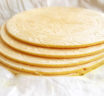
Называются они – оплатки. Этот шедевр кулинарного искусства не оставляет равнодушным никого. Первое упоминание об оплатках датируется 1788 годом Изготавливали их тогда исключительно в домашних условиях. И только в середине 19 века производство вафель обретает фабричный размах. Одной из самых знаменитых производителей этих вкусностей делается фирма «Карл Байер». Свой оригинальный кулинарный шедевр она поставляла даже […]
The game of chance known as plinko has captivated audiences for decades, stemming from its prominent role on the popular television show, The Price Is Right. It’s a simple yet compelling concept: a participant drops a disc from the top of a pegged board, and it bounces its way down, ultimately landing in a designated slot with a corresponding prize value. While seemingly random, understanding the underlying probabilities and potential strategies can elevate your appreciation – and perhaps your winnings – when engaging with this entertaining game. This article delves into the intricacies of plinko, exploring its mechanics, the illusion of control, and how to approach it with a balanced perspective.
At its core, a plinko board consists of a vertical board filled with rows of pegs. A disc, typically a flat puck, is released from the top and descends, deflecting off each peg. The direction of each deflection is largely determined by the slight imperfections of the pegs and the initial release point. While it appears random, the board’s design dictates a probability distribution of where the disc will ultimately land. Larger boards with more pegs generally offer a more even distribution, while smaller boards may skew towards certain slots. Understanding this distribution is the first step towards appreciating the game’s mechanics.
| Small | 30-50 | Skewed, favoring central slots | $10 – $100 |
| Medium | 60-90 | Moderately Even | $50 – $500 |
| Large | 100+ | More Evenly Distributed | $100 – $1000+ |
The placement of pegs is crucial. Even a slight variance in peg height or angle can significantly affect the disc’s trajectory. The game’s designers often implement these subtle variations to add an element of unpredictability, ensuring a fair and entertaining experience. It’s these subtle imperfections that transform what might be a predictable mathematical process into a spectacle of chance. Observing past results, though not a definitive predictor, can temporarily give a momentary glimpse into the propensity of a board’s pattern.
Many players attempt to exert control over the outcome by carefully selecting the drop point. While visually it may seem like a precise drop could channel the disc towards a desired slot, the reality is that the first few deflections are often chaotic and overshadow any initial aiming effect. The game primarily relies on randomness and the unpredictable behavior of the bouncing disc. Despite this inherent randomness, some strategic thinking can be applied. Players often focus on recognizing the general flow of the board and identifying patterns that emerge over several drops, or identifying ‘hot’ slots, though these are typically short-lived.
The feeling of control is often an illusion – a cognitive bias known as the ‘gambler’s fallacy’, which assumes prior outcomes influence future events in a random system. Therefore, it’s essential to approach plinko with realistic expectations and view it as a form of entertainment rather than a dependable path to wealth. Understanding this psychological aspect of the game is just as important as understanding its physical mechanics.
From a mathematical perspective, plinko’s outcomes are governed by probability. A larger board with numerous pegs will exhibit a roughly normal distribution, with most discs landing near the center and fewer landing on the extreme edges. The payout structure typically assigns higher values to the outer slots, creating a trade-off between probability and reward. A calculated ‘expected value’ can help players assess the game’s fairness and potential profitability – though this is rarely considered in casual play. The expected value is calculated by multiplying each potential outcome by its probability and summing the results.
However, determining accurate probabilities is often difficult, as it requires accounting for the subtle variations in the board’s construction and the complex physics of the bouncing disc. Casinos implementing plinko typically design the payout structure to ensure a house advantage, making the expected value slightly negative in the long run. This doesn’t preclude occasional big wins, but it indicates that, over time, the operator is likely to profit. It’s important to remember that randomness will occur in waves and streaks.
While the classic plinko board remains popular, numerous variations have emerged, both in traditional settings and in the digital realm. Online casino versions often incorporate multipliers, bonus rounds, and progressive jackpots to enhance the excitement and potential rewards. Augmented reality (AR) versions allow players to experience a virtual plinko board in their own homes. Some variations involve players controlling the initial force of the drop or incorporating features that allow for strategic placement of pegs. The core principle—a disc descending through a pegged board—remains constant, but these adaptations introduce new layers of gameplay.
| Multiplier Plinko | Random multipliers assigned to slots | Increased payout potential, higher risk |
| Bonus Round Plinko | Triggers bonus features with specific landings | Adds complexity, chance for significant rewards |
| AR Plinko | Virtual board overlayed on real-world environment | Immersive experience, convenience |
These adaptations demonstrate the game’s enduring appeal and its ability to evolve with changing technology and player preferences. The fundamental allure of plinko – its simplicity, unpredictability, and potential for large payouts – persists, ensuring its continued popularity in the world of entertainment.
Ultimately, the game of plinko offers an engaging blend of chance and spectacle. While understanding the underlying probabilities can enhance your appreciation, it’s essential to approach it with realistic expectations and view it as a form of amusement. By acknowledging the inherent randomness and managing your risk, you can experience the thrill of the bounce without falling into the trap of false control.